
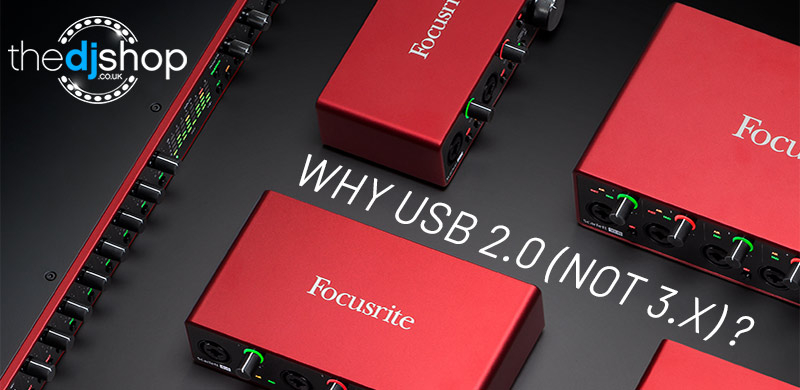
Focusrite has decided to keep the 2.0 USB ports on their Scarlett and Clarett USB Audio Interfaces rather than update them to the newer 3.x USB connection. They haven’t taken this decision lightly and have carried out extensive research into compatibility and latency of audio data transfer. Of course, developing technology is always admired, and has been considered for use across the brands' equipment, but it is something that will not be currently implemented. Why? Read on to find out.
USB 3.x details
USB 3.x can transfer huge amounts of data, theoretically up to 5Gbps. This is amazing for hard drive users and for bulk data transfer, however for audio users, this has no real bearing effect. Ultimately this is down to the user’s computer, its driver stack and the way it handles USB audio. The connection is only as good as the host equipment allows. If the driver is limited, then the latency from the audio transfer will be limited no matter how good the USB connection is.
Focusrite has provided a perfect analogy “think of it as a drainpipe and a tennis ball. The tennis ball is the data, and the width of the pipe signifies available bandwidth. With the drainpipe set at the same gradient, letting go of the ball at the top of the drainpipe will see it arrive at the bottom in a given amount of time. That’s your latency, the time it takes to go from end to end. USB 3.x offers a much wider pipe, which in terms of the analogy means that it could allow a greater number of tennis balls (more channels of audio) to travel down the pipe. But the balls would not travel down the pipe any faster, because the gradient is the same. This is the same when comparing USB 3.x and USB 2.0 in terms of the way they transfer audio data”.
It goes without saying that USB 3.x has enormous benefits, especially if you have lots and lots of audio inputs and outputs, however USB 2.0 is more than enough to cater for the needs of the Focusrite range and its users, especially with the biggest in the series being the 18i20 (18 inputs and 20 outputs concurrently).
USB 2.0 compatibility versus USB 3.x
Newer computers come with USB 3.x compatibility; however, it is believed that many users work on systems than do not possess this functionality. The 3.x USB connection supports 2.0 USB however it cannot be said that works the other way around (using a 3.x USB connection on a 2.0 USB port). Focusrite has therefore said that they feel adapting their existing ports to 3.x at this point in time would eliminate many of its current users, without actually being able to provide performance upgrades to outtake the ones currently on the market. There would also be the need to up the cost of the devices, to counteract the parts and manufacturing costs. This is something that Focusrite feel is an unnecessary move at this present moment, without any justification.
Talking of cables – let’s talk Type-C
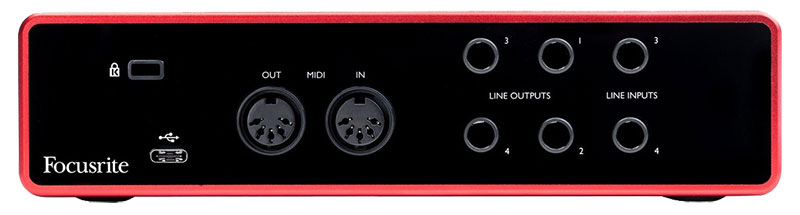
With technological advances, some of Focusrite’s Audio Interfaces comes with a Type-C USB connection. The Type-C is what is used to describe the end of the cable, in this instance, the flat and symmetrical plug/socket, which is found on more and more modern electronics such as smartphones. It’s worth noting that any units within the Focusrite range that incorporate this connection included both a standard and Type-C USB cable.
Summary
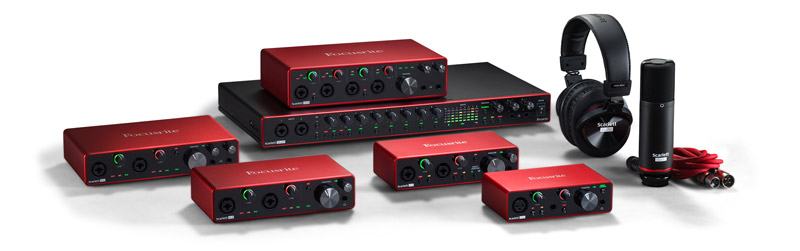
To sum it up, Focusrite has taken the decision that best lies with its product capability and end-users. Ultimately, they find that USB 2.0 is still the most proficient USB option for their range, which provides excellent quality, high transfer rate, low latency, is affordable, and overall offers the best audio data transfer option.

Share This Article